




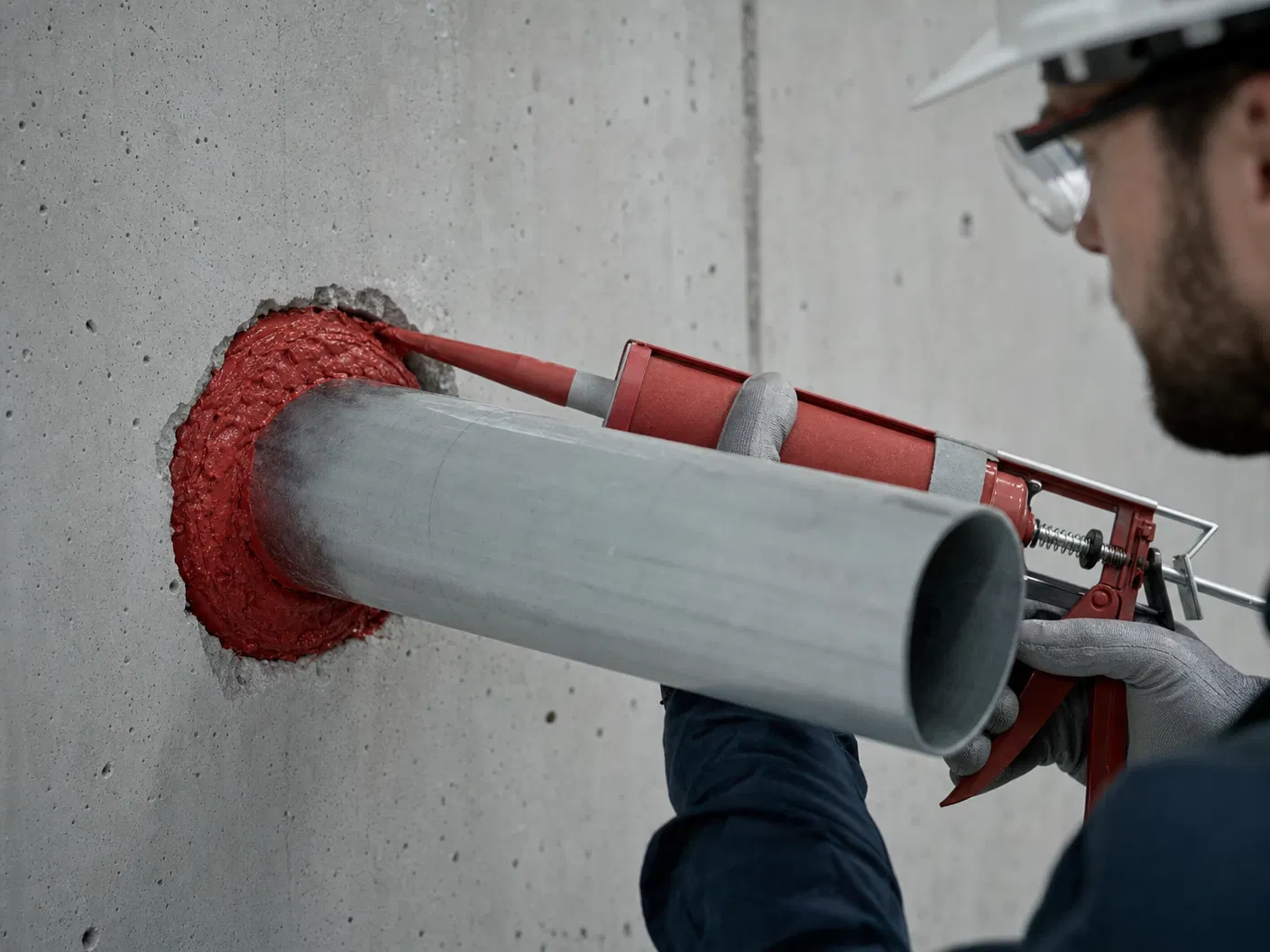
Passive fire protection is the part of fire safety that does its job by simply being there. It does not sound an alarm or spray water. It divides a building into fire-resisting compartments so that, if a fire starts, it is contained long enough for people to get out and for the fire service to respond. Firestopping, fire-resisting walls and floors, cavity barriers and correctly sealed service penetrations all do this quietly, every second of every day.
The problem is that passive fire protection is also easy to compromise — and easy to ignore.
Why the rules changed
The Grenfell Tower fire exposed how badly compartmentation can fail when it is treated as a one-off task rather than a maintained system. The Building Safety Act 2022 responded by introducing a more rigorous, accountable regime for higher-risk buildings — broadly, those at least 18 metres tall or with seven or more storeys.
Central to the Act is the idea of the golden thread: a single, reliable, continuously maintained record of a building's fire safety information, from design and construction through to occupation and every change made along the way. For passive fire protection, that has a specific consequence.
Compartmentation as a living system
Under the golden-thread approach, it is no longer enough to install firestopping correctly at construction and sign it off. You have to be able to show that the compartment line is still intact today — and intact after every cable run, pipe alteration and refurbishment that has happened since.
Every time a contractor drills through a fire-rated wall to run a new service and fails to firestop the penetration properly, the compartment is breached. Do that a dozen times over a building's life and the original fire strategy is quietly undone, with nothing in the record to show it.
What a defensible PFP regime looks like
A credible passive fire protection programme has four parts:
- Survey. A competent compartmentation survey that locates breaches and defects against the building's intended fire strategy.
- Firestopping. Remedial works installed to the correct standard, using tested and certified systems appropriate to each penetration.
- Documentation. Detailed O&M information and as-installed records that feed the golden thread — so the next contractor, surveyor or regulator can see what was done and why.
- Accreditation. Third-party certification (such as IFC) that demonstrates the work meets recognised standards, rather than relying on self-declaration.
The takeaway
The Building Safety Act did not just raise the standard for new construction. It changed what every building owner must be able to prove about the buildings they already operate. Passive fire protection is no longer something you install once and forget — it is a system you survey, maintain and evidence for the life of the building. Treating it that way is now both a legal expectation and the right thing to do.