




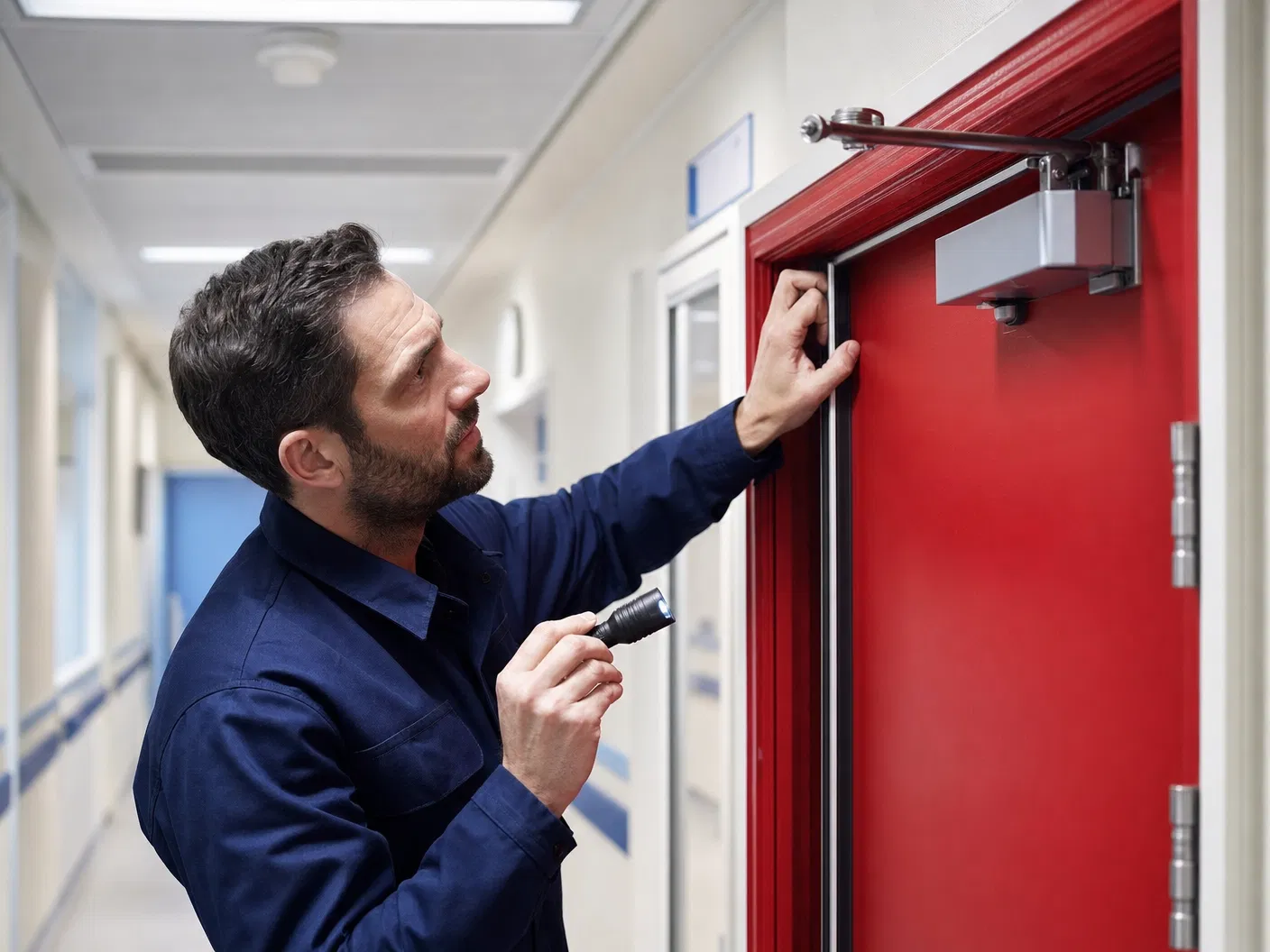
A fire door only works if every part of it works: the leaf, the frame, the intumescent seals, the hinges, the closer and the gaps around the edge. Get one element wrong and a door rated to hold back fire for 30 or 60 minutes may not hold it back at all. That is why inspection is not a box-ticking exercise — it is the difference between a passive fire protection system that performs and one that fails when it matters most.
What the regulations say
The Fire Safety (England) Regulations 2022 came into force on 23 January 2023. For multi-occupied residential buildings, they place specific, recurring duties on the Responsible Person.
- Buildings above 11 metres in height: the Responsible Person must carry out quarterly checks of fire doors in the common parts, and make annual best-endeavours checks of flat entrance doors that open onto common parts.
- All multi-occupied residential buildings (above two storeys): residents must be given information on the importance of fire doors and why they must not be tampered with or wedged open.
These duties sit on top of the wider obligation under the Regulatory Reform (Fire Safety) Order 2005 to keep fire doors in effective working order as part of the building's general fire precautions.
Where buildings most often fail
In our survey work, the same handful of defects come up again and again:
- Excessive gaps. The gap around the leaf should typically be 2–4mm. Worn or poorly hung doors drift outside that range and lose their seal.
- Damaged or painted-over intumescent seals. Seals that have been over-painted, cut short or removed entirely will not expand to close the gap under heat.
- Faulty self-closers. A door that does not fully close into its frame is not a fire door — it is a hole in the compartment line.
- Unapproved alterations. Letterboxes, cat flaps, additional locks and ventilation grilles cut into a certified door void its rating.
Inspection is a record, not just a result
The other half of compliance is evidence. Under the golden-thread principle introduced after Grenfell, you need to be able to demonstrate not only that a door is compliant today, but that it has been checked, by whom, and what was done about any defects. A defensible inspection regime produces a clear audit trail — door by door, with photographs, defect logs and remedial actions tracked to completion.
What good looks like
A competent fire door programme combines survey, maintenance, repair and, where necessary, certified replacement under one accountable contractor. That removes the gaps that appear when surveying and remedial work are split across different suppliers — and it means the person who finds the defect is the same team that closes it out.
If you are responsible for a residential block above 11 metres and you cannot point to your last quarterly common-parts check, that is the place to start.